The IRS Has Made Limited Progress Achieving Paperless Processing But first: How is a paper tax return digitized? The process generally involves creating a scanned image of paper tax return and then extracting the data from it into a digital format. Why does the IRS want to turn paper tax returns into a digital format? It will improve the accuracy and timeliness of processing, make it easier to access taxpayer data, and help save money. According to the IRS, individual paper tax returns cost 43 times more to process than an electronically filed individual tax return. For Filing Season 2025, individual paper tax returns accounted for 72% of processing costs, yet they made up only 6% of all individual tax returns filed. Additionally, the IRS spends millions annually to store paper documents. 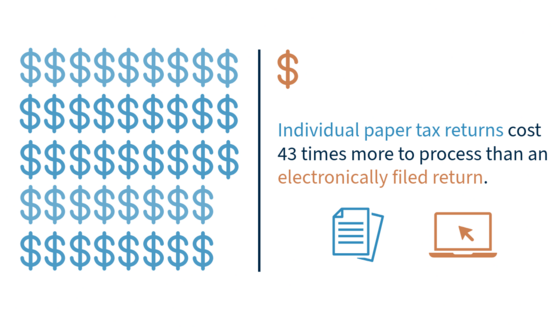 For Filing Season 2025, the IRS planned to digitally process all paper‑filed Forms 940, 941, and 1040 by the 2025 Filing Season (estimated to be 78% of all paper-filed returns). Did IRS achieve its goal? As of May 2025, contractors had scanned 517,000 paper filed forms, 5% of their planned goal. 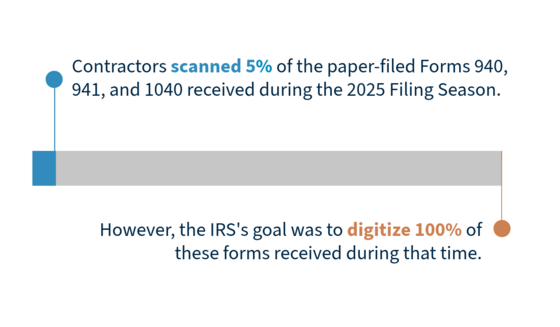 Why didn't IRS achieve its goal? After a successful pilot program, the IRS decided to develop an in-house paperless processing system for the 2025 Filing Season as a less expensive alternative to outsourcing it. However, final approval was delayed, and then concerns were raised about the suitability of the selected contractor, which required the IRS to award a new contract. To mitigate the impact of this delay, the IRS extended the contracts used during the pilot while it continued developing its in-house system.
In April 2025, the IRS was directed to stop work on its in-house paperless processing system and begin a new Zero Paper Initiative (ZPI). The ZPI consolidates IRS efforts to modernize paper processing of tax returns, correspondence, and information returns. Will they be able to reach their goals for the 2026 Filing Season? Unanticipated delays could again prevent reaching paperless processing goals for the 2026 Filing Season. Concerns about the initial ZPI contracts —this time about the lack of a competitive bidding process—led the IRS to solicit competitive bids, which delayed the effort. An interim contractor that's continuing to scan 2025 returns is having similar challenges scanning large volumes of paper returns. The interim contractor is having difficulty hiring, and workforce reductions at the IRS and the recent government shutdown have made it difficult to timely provide required security clearances for contractors. For more information:
Having trouble viewing this email? View it as a Web page.
| 





No comments:
Post a Comment